









































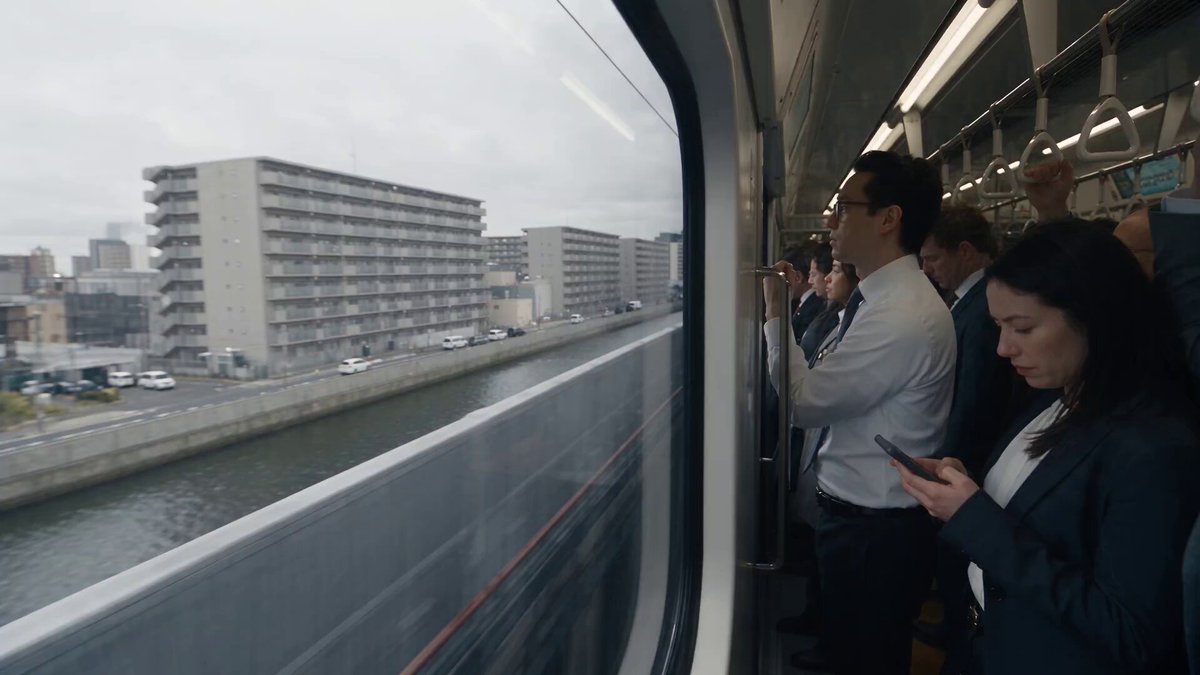
提示词
一段连续 30 秒、混乱的业余第一人称 smartphone 视频,由一名站在极度拥挤的磁悬浮通勤列车内的乘客拍摄。Single unbroken take,不得有 cuts、jump cuts、dissolves、crossfades、double exposures、portals、morphing 或人工 scene transitions。列车从地球上普通的工作日通勤开始,随后实际向下行驶,踏上一段不可能的旅程——穿过地铁隧道进入基岩,进入地壳下方的巨型虚空,经过一座被烟灰熏黑的候车站台,穿过一道庞大且受侵蚀的门,驶出至燃烧平原上方,沿一座巨坑的阶梯状坑壁向下,最终进入有人居住的地狱深处。一切都必须在物理上连贯,就像同一列火车确实正在向下穿行于每一个环境。
基调是官僚体制般的恐惧,而不是恐怖电影式的惊吓。这是一班按时刻表运行的列车。线路很老,基础设施破旧,而列车像运行其他任何线路一样运行这条线路。恐怖源于这段旅程是如此寻常,而目的地最终显露出的规模又是如此庞大。
车内是一节极度拥挤、只有站位的磁悬浮通勤车厢。乘客肩挨着肩挤在一起,抓着头顶拉环和竖直扶杆。背包被夹在身体之间,外套和宽松衣物随着加速摆动,拉环依惯性摇晃,整节车厢持续震动并咯咯作响。camera 是一部廉价 smartphone,由一名站立的乘客在胸口高度握持,他用另一只手抓着扶杆。手机本身绝不能出现,因为手机就是 camera。framing 是歪斜的、略微偏离中心的,部分被肩膀和手臂遮挡,而且并不完美,像真正意外拍到的 footage。camera 持续 shake、roll、yaw,并因加速而被甩动。使用真实的 rolling-shutter distortion、autofocus hunting、exposure pumping、blown highlights、crushed noisy shadows、low-bitrate compression、macroblocking 和 smeared motion blur。它必须看起来像真正随手拍下的 smartphone footage,而不是专业 cinematic footage。
camera 始终以与列车行驶方向约 90 度的角度透过 LEFT-SIDE WINDOWS 向外看。列车始终向前行驶,外部世界始终从车窗前方向后方掠过。绝不切换到 forward-facing train-nose view。绝不展示列车前部。同一节车厢、同一批乘客、同样的扶杆、同样的拉环和同样的车窗,在整个旅程中始终保持视觉一致。车厢内部是恒定而真实的锚点,外部世界则变得越来越不可能。
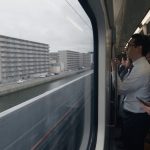
0 to 3 seconds。以高架城市线路上一个普通阴沉工作日的通勤场景开始。灰色公寓楼、屋顶水箱、废品场、高架电线、运河和下方道路上的车流,以不同距离从左侧车窗外飞驰而过,呈现真实的 parallax。乘客们疲惫且大多漠不关心——有人看手机,有人望向窗外,有人低声交谈。一声平静的公共广播提示音响起,播报员轻声说:"Next stop: Hell." 没有人作出反应。一名乘客短暂抬眼,然后继续看手机。列车加速,车厢猛烈横向一晃,所有人都本能地抓得更紧。
3 to 6 seconds。线路下沉进入路堑,随后进入隧道。铺砖的地铁墙面、线缆管路、检修灯和一闪而过的站台,以强烈的明暗条带在车窗外频闪,使车厢陷入断续闪动的照明中。随着列车下降,隧道逐渐显出年代:现代混凝土变成更古老的砖砌结构,随后变成粗凿岩石。设施变得焦黑并覆满烟灰——熏黑的信号灯、腐蚀的支架、烧到只剩裸露金属的线缆。这条线路已经运行了很久。坡度明显变陡;乘客因俯倾而向后倚靠,拉环明显偏离竖直方向悬垂。
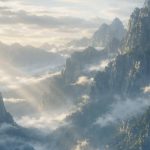
6 to 9 seconds。隧道壁变成原始地质岩层,列车此时显然正以不可能的速度穿过地壳向下行驶。透过左侧车窗,岩壁以清晰可见的层理飞掠而过——浅色石灰岩、深色页岩、红色铁染条带,以及被车厢灯光照亮的矿脉。空气开始升温,乘客松开衣领。随后,在机械轰鸣之下,在任何东西变得可见之前先传来一种声音:一大片遥远、持续不断的人声,来自极远处,带着沉重的 reverberation,始终无法分辨出任何单独的词句。它并不响亮。它只是存在着,而且不会停止。两名乘客互相看了一眼。没有人说话。
9 to 11.5 seconds。岩壁完全消失,列车驶入一个比城市还大的虚空,看不到遥远的另一侧。列车沿洞壁上的一条窄缘行驶;车窗下方的空间坠入黑暗。高达数公里的石柱矗立在虚空中,形成强烈的 parallax——近处石柱横扫而过,远处石柱几乎没有位移。在远下方和远前方,一抹微弱的橙色光芒已经可见。它必须从这一刻起就已存在于 frame 中,并从此持续增强,绝不能突然出现或骤然变大。此处的人声更响了,扩散在一个无比庞大的空间中。靠近玻璃的一名乘客略微前倾。另一人轻声说:"Ohh."
11.5 to 14 seconds。列车经过一座车站。一座被烟灰熏黑的站台凿在岩壁中——磨损的边缘、熄灭的灯、污垢下无法辨认的褪色标记——一些身影在站台上整齐排队等候,面向轨道,完全一动不动。它们仅以高速掠过不到一秒,是站台灯光映衬下的黑暗轮廓,距离始终不足以看清面孔。列车没有减速。没有人上车。站台消失在车厢后方。这一刻,乘客们明白了。几个人不再看手机。余烬开始从下方向上飘过车窗。
14 to 16 seconds。前方,一道墙横贯整个虚空——一整面连续的屏障,向左右两侧延伸至视野之外,向上超过穹顶。一道庞大的门洞开凿在墙中,列车从中穿过;拱门高达数百米,石面被难以想象的巨大通行量侵蚀得平滑,雕刻标记已磨损到无法辨认。有半秒钟,车厢处于拱门阴影中,一切陷入黑暗。随后列车穿了过去,另一侧的光线截然不同:温暖、强烈,并且来自下方。
16 to 19 seconds。列车在燃烧平原上方疾驰。左侧车窗外:一片广阔的深色凝固地表,结壳并开裂成缓慢移动的板块,耀眼的橙色裂隙穿行其间;远处的熔融物质喷泉缓慢升降,由于其真实尺度而仿佛以 slow motion 运动;烟柱高耸数公里。其上横贯着抬高的石质堤道,堤道上是人群——密集、连续、缓慢移动,所有人都朝同一方向前行,一直延伸到视野极限。只能从远处看到他们汇成的群体,绝不展示细节。此时进入车厢的光线强势而硬朗,在脸庞、扶杆和拉环边缘投下清晰锐利的橙色光,后方则是深黑阴影。车厢内的空气明显混浊。人声持续不断。
19 to 21 seconds。平原止于一座巨坑的边缘——这是一条宽阔到远侧坑壁在烟霾中仅依稀可见的竖井。列车冲过边缘,开始沿内部坑壁下降。坑壁呈阶梯状:巨大的同心台地逐层向下退去,每一层都比上一层更深、更暗,最后消失在层层烟雾中。下降的加速度把乘客向下并向前推向扶杆。灰烬开始撞击车窗并向后划出痕迹。
21 to 23 seconds。台地上有人居住。无穷无尽的缓慢队列沿每一层台地移动,一串串身影顺着坑壁的弧线走入下方烟雾,消失在视野之外,被下方火焰从底部照亮。这里没有混乱——一切井然有序、耐心且永无尽头,而这更加可怕。熔炉口开在岩壁上,炉喉泛着白光,长长的队伍等候在前。所有事物都在远处。没有任何东西近到足以分辨。进入车厢的光线变成更深的红色,荧光灯被彻底压过。最靠近车窗的乘客微微向玻璃贴近。
23 to 25 seconds。巨大的形体在台地间移动——一些身影的高度是周围人群的许多倍,沿台地缓慢行走,其尺度只能通过对比来确立。它们没有看向列车。远处带翼的形体在车厢下方低空掠过,以符合其体型的缓慢沉重振翅动作飞行,随后消失在烟雾中。数以千计的石栏和带栅栏的开口凿在坑壁上,像住宅一样层层退入烟霾。灰烬积聚在车窗角落。车厢热到玻璃上的雾气成波地凝结又消散。
25 to 27 seconds。列车抵达深层,地狱的完整范围显露出来。它不是一座依人类规划建成的城市,也不是一处洞穴。它是一片向所有方向延伸、持续有人居住的地质构造——黑石高塔与悬崖表面熔为一体,岩石中凿出的拱顶空间具有大教堂般的尺度,熔融物质河流沿区域之间开凿出的沟渠流淌,并以缓慢明亮的瀑布坠向更深层,桥梁跨越宽达数公里的裂隙;而在这一切之上,到处都是人群。烟柱上升数公里,在看不见的穹顶下铺展开来。每一层都被自己的火焰照亮。列车沿贯穿其间的一道山脊线疾驰;拱门和渡槽的跨拱从头顶掠过,台地以猛烈的 parallax 从车窗下方流逝。根本无法看出这一切在何处终结。
27 to 29 seconds。深处的景象继续从车窗外掠过。camera 极难应对强烈反差,火焰被 blown out,其余一切则被压进噪点之中。灰烬结块附着在玻璃角落。乘客在彻底的沉默中贴着车窗,脸庞被下方强烈的橙色光照亮,表情震惊,完全静止。一人轻声低语:"What is that?" 没有人回答。autofocus 在玻璃上的灰烬和玻璃外的世界之间来回 hunting。
29 to 30 seconds。火焰终止。列车驶出烟雾,最底层区域豁然展开——那里并未燃烧。那是一片延伸到可见地平线之外的巨大冰冻平原,一整片宽阔得不可思议的深灰色冰层,绝对静止,唯一的光来自冰层内部一抹微弱的苍白辉光。可以看到一些形体静止不动地封存在其中,彼此相隔很远,一直退向地平线,绝不展示细节。所有外部声音同时戛然而止——人声、火焰声、一切声音——只剩车厢内的声响。热量消失,霜花瞬间在车窗外侧蔓延。尺度感如同行星。乘客们彻底沉默地凝视着。大约在 29.7 seconds,平静的 PA 声音轻声说:"Welcome to Hell." 列车继续行驶。camera 继续自然 shake,冰冻荒原在左侧车窗外无尽延伸。
Lighting
整个旅程中的光线必须自然演变。以约 6500K 的平淡阴天日光开始。在隧道中,使用经过的检修灯在近乎全黑的环境里形成强烈的频闪光带,随后让光源逐渐变得稀疏,直到车厢自身微弱的荧光灯管成为唯一照明。在虚空中,车内灯光逐渐没入虚无。随后引入从下方逐渐增强的暖橙色光——起初只在脸部下半区域形成微弱的泛光,接着与车内冷白光混合,随后完全占据主导:强烈、high-contrast、边缘锐利,并带有深黑阴影。在燃烧平原上方,它应强烈到足以让车窗处的手机传感器 blown out。在深层,它变成红橙色,并由各个距离上的无数火焰从四面八方照来。在最后一秒,所有暖光消失,取而代之的是冰层发出的微弱苍白亮光,寒冷且几乎没有明确光源。所有外部光线在每个阶段都必须自然地透过 LEFT-SIDE WINDOWS 进入,并落在乘客的脸和衣物上。不要添加人工车内照明来制造这些色彩。
Passengers
在整个旅程中,所有乘客都必须保持完全普通。真实的皮肤纹理、细微的毛细血管差异、自然眨眼、呼吸、眼球运动和不完美的面部对称性。衣物拥有真实褶皱,并对加速度作出反应。乘客必须持续进行细小且彼此独立的动作:转移重心、调整握姿、因炎热松开衣领、擦去玻璃上的雾气、转头、把扶杆抓得更紧。不要让他们 freeze。不要让所有人在同一时刻作出反应。不要让他们进行夸张表演。
他们的情绪变化要含蓄:听到广播时的漠然 → 隧道中的轻微困惑 → 听见人声时的不安 → 候车站台掠过时准确无误的恍然大悟 → 下降途中的恐惧 → 深处彻底震惊的沉默。不要尖叫。只在第一次看见光芒时出现一声轻柔的 "Ohh",并在临近结尾时出现一句低语 "What is that?"。最有力的反应是不作反应——只是把脸贴在玻璃上,被下方本不应存在的事物照亮。
Physics
列车始终向前行驶,并在进入隧道后始终向下行驶。乘客依据加速度摇摆并逆着坡度倾斜;下降时,拉环偏离竖直方向悬垂。宽松衣物会对运动作出反应。在每个阶段,外部物体都以不同速度处于不同距离,形成强烈而真实的 parallax——近处石柱横扫而过,中距离台地稳定移动,远处区域几乎不发生位移。灰烬和余烬必须独立于列车运动,随热气流向上飘,而不是跟随车厢一起流动。热量必须通过物理现象表现出来:车窗起雾并散去、车厢内出现雾霾、最后一刻结霜。巨大身影和飞行形体必须缓慢移动,因为它们无比巨大。任何东西都不能 teleport,任何东西都不能 freeze,任何东西都不能突然出现,任何东西都不能在没有物理原因的情况下改变位置。
No transitions
绝对不能有任何视觉 transitions。不得有 dissolves、crossfades、portals、morphing 或 ghosted overlays。每一次环境变化都必须因为列车实际驶入下一个环境而发生。城市变成路堑,路堑变成隧道,隧道变成基岩,基岩打开成为虚空,虚空中包含候车站台,虚空终止于墙体,gateway 通向燃烧平原,平原终止于巨坑边缘,边缘变成阶梯状下降通道,台地上逐渐布满队列,队列进一步变成完整的有人居住的深处,而深处最终通向冰冻平原。它必须像一段在物理上连续的不可能旅程,其中每一步都是前一步不可避免的结果。
Audio
Audio 必须完全是 diegetic,不得有 music。使用廉价且经过压缩的 smartphone microphone 音质。列车持续发出低沉的磁悬浮轰鸣、机械碰撞声、扶杆震颤声、车窗振动声、拉环摇摆声和低频车厢隆隆声,另外还有乘客的呼吸声和衣物摩擦声。在隧道中加入强烈且带 reverberation 的 slap-back,以及列车经过开口时产生的压力变化。
这段视频最具标志性的声音是人声。它们必须在 6 to 9 seconds 出现,早于任何可见景象,是一大片遥远、连续不断的人声,带着巨大的 reverberation,始终无法分辨出具体话语,也绝不能增强为尖叫。从这一刻起,它们永不停止。随着深度增加,它们逐渐增强;随着空间展开,它们扩散至更宽的 stereo field。在人声下方,一种极低频的 resonance 稳步增强,更多是被身体感受到,而非被耳朵听到。在燃烧平原上方,加入广阔而遥远的轰鸣,以及间隔很久、不规律出现的低沉爆响。灰烬撞击车体时发出细小且不规律的滴答声。在深处,人声无比庞大,以许多不同距离层层叠加,并与规模巨大的模糊工业声混合,始终无法解析出具体细节。
在最后一秒,所有外部声音同时停止——外界彻底寂静,只剩车厢声、乘客呼吸声以及冰层在车体外嘎吱作响。大约在 29.7 seconds,平静的 PA 声音轻声说:"Welcome to Hell."
Style and content limits
尽管环境极为壮观,整体 style 必须始终保持肮脏、photorealistic 的业余 smartphone footage。Vertical 9:16、real-time speed、no slow motion、no stabilisation、no cinematic camera、no perfect composition、no clean VFX presentation。使用大量 shadow noise、blown highlights、low-bitrate compression、rolling-shutter skew、autofocus hunting、auto-exposure pumping、smeared motion blur 和歪斜的 framing。camera 应偶尔被肩膀、手臂或附近乘客部分遮挡,并且应极难处理火焰与黑暗之间的极端反差。
地狱通过规模、建筑、远处人群、火焰、灰烬和声音来表现。不要展示苦难、伤害、尸体、鲜血、束缚或任何 graphic content。列车外的每个身影都保持为远处的剪影或群体的一部分——没有任何一个近到足以看清其面孔或处境。不要使用可识别的宗教图像或任何清晰可读的文字;所有标记都已侵蚀到无法辨认。不要让它看起来像 game cinematic 或干净的 VFX render。外部世界应令人不知所措且在物理上不可能,但录像本身必须显得原始、偶然且可信。
The most important rule
ONE SINGLE CONTINUOUS TAKE。不得有 cuts、jump cuts、dissolves、crossfades、scene resets 或人工 transitions。同一列火车、同一批乘客和同一台 camera 从头到尾始终存在。橙色光芒必须从第一个洞窟起就以遥远的微弱光斑可见,随后持续且不可避免地增强,直到填满车窗。人声必须早于火焰出现,并且直到最后一秒之前都不能停止。热量必须在整个下降过程中以物理方式逐渐累积,使它在结尾彻底消失时形成冲击。人群必须逐渐出现——先是候车站台,然后是堤道上的人群,接着是台地上的队列,最后是完整的有人居住的深处——绝不能一次全部出现。结尾时列车仍在行驶,冰冻平原在左侧车窗外无尽延伸,乘客保持沉默,车厢仍在 shake,PA 广播声逐渐消逝在冰层的声响中。
原文提示词(English)
One continuous 30-second chaotic amateur first-person smartphone video filmed by a standing passenger inside a completely packed magnetic-levitation commuter train. Single unbroken take with no cuts, jump cuts, dissolves, crossfades, double exposures, portals, morphing or artificial scene transitions. The train begins as an ordinary weekday commute on Earth and then physically travels downward on an impossible journey — through subway tunnels into bedrock, into a colossal void beneath the crust, past a soot-blackened waiting platform, through an immense eroded gate, out above a burning plain, down the terraced wall of a vast pit, and into the inhabited depths of Hell. Everything must feel physically connected, as though the same train is genuinely travelling down through each environment.
The tone is bureaucratic dread, not horror-movie shock. This is a scheduled service. The route is old, the infrastructure is worn, and the train runs it the way it runs any other line. The horror comes from how ordinary the journey is and how enormous the destination turns out to be.
The interior is a completely packed standing-room-only maglev commuter car. Passengers are pressed shoulder-to-shoulder, gripping overhead straps and vertical poles. Backpacks are squeezed between bodies, coats and loose clothing shift with acceleration, straps swing on their inertia, and the entire carriage constantly vibrates and rattles. The camera is a cheap smartphone held at chest height by one standing passenger who grips a pole with the other hand. The phone itself is NEVER visible because the phone is the camera. The framing is crooked, slightly off-centre, partially blocked by shoulders and arms, and imperfect like genuine accidental footage. The camera constantly shakes, rolls, yaws and gets thrown around by acceleration. Use realistic rolling-shutter distortion, autofocus hunting, exposure pumping, blown highlights, crushed noisy shadows, low-bitrate compression, macroblocking and smeared motion blur. It must look like genuine spontaneous smartphone footage, not professional cinematic footage.
The camera always looks through the LEFT-SIDE WINDOWS at approximately 90 degrees to the train's direction of travel. The train always travels forward and the outside world always streams past the windows from front-to-back. Never switch to a forward-facing train-nose view. Never show the front of the train. The same carriage, same passengers, same poles, same straps and same windows remain visually consistent throughout the entire journey. The interior is the constant realistic anchor while the outside world becomes increasingly impossible.
0 to 3 seconds. Begin with an ordinary overcast weekday commute on an elevated urban line. Grey apartment blocks, rooftop water tanks, a scrapyard, overhead wires, a canal and traffic on a road below streak past the left windows at different distances with realistic parallax. The passengers are tired and mostly uninterested — some on phones, some staring out, some talking quietly. A calm public-address chime sounds and an announcer quietly says, "Next stop: Hell." Nobody reacts. One passenger glances up briefly and goes back to their phone. The train accelerates and everyone instinctively tightens their grip as the carriage gives a hard lateral jolt.
3 to 6 seconds. The line drops into a cutting and then into a tunnel. Tiled subway walls, cable runs, service lights and a passing platform strobe across the windows in hard bands of light and dark, throwing the carriage into stuttering illumination. The tunnel ages as the train descends: modern concrete becomes older brickwork, then rough-cut stone. The fittings become scorched and soot-caked — blackened signal lights, corroded brackets, cabling burnt down to bare metal. This route has been running a long time. The gradient steepens noticeably; passengers lean back against the pitch and the straps hang visibly off-vertical.
6 to 9 seconds. The tunnel wall becomes raw geology and the train is now clearly descending through the crust at impossible speed. Through the left windows the rock face streaks past in visible strata — pale limestone, dark shale, red iron-stained bands, seams catching the carriage light. The air begins to heat and passengers loosen collars. Then, under the mechanical roar, a sound arrives before anything is visible: a vast, distant, continuous mass of human voices, far away and heavily reverberant, never resolving into individual words. It is not loud. It is simply there, and it does not stop. Two passengers look at each other. Nobody says anything.
9 to 11.5 seconds. The rock wall falls away entirely and the train emerges into a void larger than a city, with no visible far side. It runs along a ledge on the wall; below the windows the space drops away into darkness. Stone columns kilometres tall stand in the void with strong parallax — near ones sweeping past, distant ones barely shifting. Far below and far ahead, a faint orange glow is already visible. It must already exist in the frame from this moment and grow continuously from here forward without ever popping or suddenly enlarging. The voices are louder here, spread across an enormous space. One passenger near the glass leans forward slightly. Another quietly says, "Ohh."
11.5 to 14 seconds. The train passes a station. A soot-blackened platform is cut into the rock wall — worn edge, dead lamps, faded markings unreadable under the grime — and figures are standing on it in an orderly queue, waiting, facing the track, completely motionless. They are seen for less than a second at speed, as dark shapes against the platform light, never close enough to read faces. The train does not slow. Nobody boards. The platform is gone behind the carriage. This is the moment the passengers understand. Several stop looking at their phones. Embers begin drifting upward past the windows from below.
14 to 16 seconds. Ahead, a wall crosses the entire void — a single continuous barrier extending beyond sight in both directions and upward past the ceiling. The train passes through an immense gateway cut into it, an arch hundreds of metres tall, its stone eroded smooth by an unimaginable volume of traffic, its carved markings worn past legibility. For half a second the carriage is in the shadow of the arch and everything goes dark. Then it is through, and the light on the far side is completely different: warm, hard, and coming from below.
16 to 19 seconds. The train races above a burning plain. Outside the left windows: a vast crusted expanse of dark solidified ground cracked into slow-moving plates with brilliant orange fissures running between them, distant fountains of molten material rising and falling in slow motion because of their true scale, and smoke columns standing kilometres high. Running across it are raised stone causeways, and on the causeways are crowds — dense, continuous, moving slowly, all in the same direction, extending to the limit of visibility. They are seen only as masses at distance, never in detail. The light entering the carriage is now dominant and hard, throwing sharp orange edges on faces, poles and straps with deep black shadows behind them. The interior air is visibly hazy. The voices are constant.
19 to 21 seconds. The plain ends at the rim of a colossal pit — a shaft so wide the far wall is only a suggestion in the haze. The train races over the edge and begins descending along the interior wall. The wall is terraced: enormous concentric ledges receding downward, each deeper and darker than the last, disappearing into smoke layers. The descent acceleration pushes the passengers down and forward against the poles. Ash begins striking the windows and streaking backward.
21 to 23 seconds. The terraces are populated. Endless slow processions move along every ledge, strings of figures following the curve of the wall down into the smoke and out of sight, lit from below by the fires beneath them. There is no chaos in it — it is orderly, patient and entirely without end, which is worse. Furnace mouths open in the rock face, glowing white at their throats, and long queues stand before them. Everything is at distance. Nothing is close enough to resolve. The light entering the carriage takes on a deeper red and the fluorescents are overwhelmed. Passengers nearest the window press slightly closer to the glass.
23 to 25 seconds. Enormous shapes move among the terraces — figures many times the height of the crowds around them, walking slowly along the ledges, their scale established only by comparison. They do not look at the train. Distant winged forms cross beneath the carriage at low altitude with slow heavy wingbeats appropriate to their size and vanish into the smoke. Stone pens and barred openings are cut into the wall in their thousands, receding into the haze like housing. Ash accumulates in the corners of the windows. The carriage is hot enough that the glass fogs and clears in waves.
25 to 27 seconds. The train reaches the deep layer and the full extent of Hell reveals itself. It is not a city on a human plan and it is not a cavern. It is a continuous inhabited geology extending in every direction — towers of black stone fused into cliff faces, vaults hollowed out of the rock at cathedral scale, rivers of molten material running in cut channels between districts and falling in slow luminous cataracts to levels further down, bridges spanning gaps kilometres across, and everywhere on all of it, crowds. Smoke columns rise for kilometres and flatten against unseen ceilings. Every level is lit by its own fires. The train races along a ridge line through the middle of it; arches and aqueduct spans pass overhead and terraces stream past below the window with violent parallax. It is impossible to see where any of it ends.
27 to 29 seconds. The depths continue past the windows. The camera struggles badly with the contrast, blowing out the fires and crushing everything else into noise. Ash cakes the corners of the glass. Passengers are pressed against the windows in total silence, faces lit from below in hard orange, expressions stunned and completely still. One person quietly whispers, "What is that?" Nobody answers. Autofocus hunts between the ash on the glass and the world beyond it.
29 to 30 seconds. The fires end. The train passes out of the smoke and the lowest region opens — and it is not burning. It is a vast frozen plain stretching beyond the visible horizon, an impossibly wide sheet of dark grey ice, absolutely still, lit by nothing but a faint pale glow from within itself. Shapes are visible held motionless within it, spaced far apart, receding to the horizon, never shown in detail. Every exterior sound stops at once — the voices, the fires, everything — leaving only the carriage. The heat drops out and frost blooms instantly across the outside of the windows. The scale feels planetary. The passengers stare in complete silence. At approximately 29.7 seconds the calm PA voice says quietly, "Welcome to Hell." The train continues moving. The camera keeps shaking naturally as the frozen expanse extends endlessly beyond the left window.
Lighting
The lighting must evolve naturally throughout the journey. Begin with flat overcast daylight around 6500K. In the tunnels use harsh strobing bands from passing service lights against near-total dark, then let the sources become sparse until the carriage's own weak fluorescent tubes are the only illumination. In the void the interior lights fall off into nothing. Then introduce a growing warm orange from below — first a faint wash on the lower half of faces, then mixing with the cold interior white, then completely dominating it: hard, high-contrast, sharp-edged, with deep black shadows. Above the burning plain it should be strong enough to blow out the phone's sensor at the window. In the deep layer it becomes red-orange and omnidirectional from countless fires at every distance. In the final second all warm light vanishes and is replaced by a faint pale luminance from the ice, cold and almost sourceless. All exterior light must enter naturally through the LEFT-SIDE WINDOWS and fall across passengers' faces and clothing at every stage. Do not add artificial interior lighting to create the colours.
Passengers
Keep all passengers completely ordinary throughout the journey. Realistic skin texture, subtle capillary variation, natural blinking, breathing, eye movement and imperfect facial symmetry. Clothing has realistic folds and responds to acceleration. Passengers must continuously perform small independent movements: shifting weight, adjusting grip, loosening a collar in the heat, wiping fog from the glass, turning their heads, tightening their hands around poles. Do not make them freeze. Do not make everyone react at the same moment. Do not let them perform dramatic acting.
Their emotional progression is subtle: indifference at the announcement → mild confusion in the tunnels → unease when the voices arrive → the exact moment of understanding as the waiting platform passes → dread on the descent → complete stunned silence in the depths. No screaming. Only one soft "Ohh" at the first glow and one whispered "What is that?" near the end. The most powerful reaction is no reaction — just faces pressed against the glass, lit from below by something that should not exist.
Physics
The train always travels forward and always downward after the tunnel. Passengers sway according to acceleration and lean against the gradient; straps hang off-vertical on the descents. Loose clothing reacts to movement. Exterior objects have different velocities and distances with strong realistic parallax at every stage — near stone columns sweep past, mid-distance terraces move steadily, distant districts barely shift. Ash and embers must move independently of the train, drifting upward on thermal currents rather than streaming with the carriage. Heat must be expressed physically: window fogging and clearing, haze inside the carriage, frost at the very end. Enormous figures and flying forms must move slowly, because they are enormous. Nothing teleports, nothing freezes, nothing suddenly appears, and nothing changes position without physical cause.
No transitions
There are absolutely no visual transitions. No dissolves, crossfades, portals, morphing or ghosted overlays. Every environment change happens because the train physically travels into the next environment. The city becomes a cutting, the cutting becomes a tunnel, the tunnel becomes bedrock, the bedrock opens into the void, the void contains the waiting platform, the void ends at the wall, the gateway gives onto the burning plain, the plain ends at the pit rim, the rim becomes a terraced descent, the terraces fill with processions, the processions become the full inhabited depths, and the depths open onto the frozen plain. It must feel like one physically continuous impossible journey where every step is the inevitable consequence of the step before it.
Audio
Audio must be entirely diegetic with no music. Use cheap compressed smartphone microphone quality. The train produces a constant deep maglev roar, mechanical clatter, rattling poles, vibrating windows, swinging straps and low-frequency carriage rumble, plus passenger breathing and clothing movement. In the tunnels add hard reverberant slap-back and pressure changes as the train passes openings.
The defining sound of this video is the voices. They must arrive at 6 to 9 seconds, before anything is visible, as a distant continuous mass of human voices with enormous reverberation, never resolving into words and never rising to screaming. From that point they never stop. They grow with depth and spread across a wider stereo field as the spaces open up. Beneath them, a very low frequency resonance builds steadily, felt more than heard. Above the burning plain add a broad distant roar and irregular deep concussions at long intervals. Ash strikes the hull as fine irregular ticking. In the depths the voices are vast, layered at many distances, and mixed with immense indistinct industrial-scale sound that never resolves into detail.
In the final second every exterior sound stops at once — total silence outside, leaving only the carriage, the passengers' breathing, and ice creaking against the hull. At approximately 29.7 seconds the calm PA voice says quietly, "Welcome to Hell."
Style and content limits
The overall style must remain dirty photorealistic amateur smartphone footage despite the spectacular environments. Vertical 9:16, real-time speed, no slow motion, no stabilisation, no cinematic camera, no perfect composition, no clean VFX presentation. Use heavy shadow noise, blown highlights, low-bitrate compression, rolling-shutter skew, autofocus hunting, auto-exposure pumping, smeared motion blur and crooked framing. The camera should occasionally be partially blocked by a shoulder, arm or nearby passenger, and should struggle badly with the extreme contrast between fire and darkness.
Hell is conveyed through scale, architecture, crowds at distance, fire, ash and sound. Do not show suffering, injury, bodies, blood, restraints or any graphic content. Every figure outside the train stays a distant silhouette or part of a mass — none is ever close enough for its face or condition to be read. Do not use recognisable religious iconography or legible text of any kind; all markings are eroded past legibility. Do not make it look like a game cinematic or a clean VFX render. The world outside should be overwhelming and physically impossible, but the recording itself must look raw, accidental and believable.
The most important rule
ONE SINGLE CONTINUOUS TAKE. No cuts, no jump cuts, no dissolves, no crossfades, no scene resets and no artificial transitions. The same train, same passengers and same camera remain present from beginning to end. The orange glow must be visible as a faint distant smudge from the first cavern and grow continuously and inevitably until it fills the window. The voices must arrive before the fire and never stop until the final second. The heat must build physically across the whole descent so that its total disappearance at the end lands as a shock. The population must emerge gradually — the waiting platform, then crowds on the causeways, then processions on the terraces, then the full inhabited depths — never appearing all at once. End while the train is still moving, the frozen plain extending endlessly beyond the left window, passengers silent, carriage still shaking, the PA announcement fading into the sound of ice.
建议模型
Seedance
视频地址